
Your dog looks perfectly fine. They’re eating, playing, and wagging their tail. So why bother with a vet visit? The answer is that dogs are experts at hiding discomfort. By the time symptoms show up, a condition can already be well advanced. A thorough dog wellness exam checklist covers far more than most pet owners realize, and understanding each step can change how you think about your pet’s annual visit.
Dogs of all ages benefit from a head-to-tail evaluation at least once a year. Puppies and senior dogs often need more frequent checkups. Preventive care catches problems early, when treatment is simpler, less expensive, and more effective. This guide breaks down exactly what your vet looks for during that appointment and why each piece matters.
What Is a Dog Wellness Exam and Why Does It Matter?
A dog wellness exam is a scheduled, comprehensive physical evaluation performed by a licensed veterinarian. It is not just a vaccination appointment. It is a structured health screening designed to detect early signs of disease, track changes over time, and keep your dog protected from preventable illness.
According to the American Veterinary Medical Association (AVMA), annual wellness exams are one of the most important tools in preventive veterinary medicine. Many serious conditions, including heart disease, kidney disease, and cancer, develop silently. A trained veterinarian can detect early warning signs through a physical exam long before a pet owner notices anything at home.
What Your Vet Checks During the Appointment
A complete annual vet checkup for dogs follows a structured sequence. Here is what your veterinarian will typically evaluate:
- Weight and body condition score. Your vet records your dog’s weight and assesses body fat. Both obesity and unexplained weight loss are red flags worth investigating.
- Eyes and ears. The vet checks for discharge, cloudiness, inflammation, or signs of infection. Ear infections are common in dogs, especially in humid climates like Virginia.
- Teeth and gums. Dental disease affects an estimated 80% of dogs over age three. Your vet looks for tartar buildup, gum redness, and signs of tooth decay or pain.
- Skin and coat. Lumps, dry patches, hair loss, and parasites are all evaluated. Skin changes can signal allergies, hormonal imbalances, or early tumors.
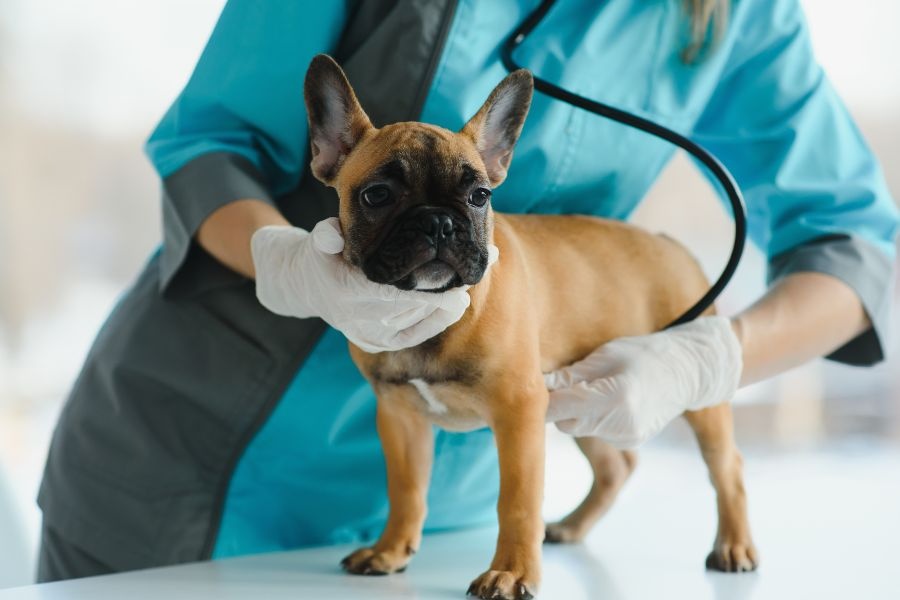
- Heart and lungs. Using a stethoscope, your vet listens for irregular heartbeats, heart murmurs, and abnormal breathing sounds.
- Abdomen. Your vet gently palpates the belly to feel the liver, kidneys, spleen, and intestines. Unusual size, texture, or pain response can indicate internal issues.
- Lymph nodes. Swollen lymph nodes may point to infection or certain types of cancer.
- Musculoskeletal system. The vet checks your dog’s joints, muscle tone, and gait for signs of arthritis or injury.
- Neurological signs. Reflexes and coordination are briefly assessed, especially in senior dogs.
Many dogs we see for their first wellness exam in years have dental disease or early arthritis that the owner had no idea about. Catching these conditions during a dog’s physical exam visit makes all the difference in long-term outcomes.
Vaccines, Parasite Prevention, and Lab Work
The physical exam is only one part of a complete annual visit. Your vet will also review your dog’s vaccination history and recommend updates based on age, lifestyle, and risk factors. Core vaccines such as rabies and distemper-parvovirus combination vaccines are typically required. Lifestyle vaccines, like leptospirosis or Bordetella, depend on your dog’s environment and activities.
Parasite screening is equally important. Your vet will likely recommend a heartworm test, a fecal exam for intestinal parasites, and a discussion about flea, tick, and heartworm prevention. In Virginia, tick exposure is a year-round concern, and we frequently remind our clients that prevention is far easier than treating a tick-borne illness after the fact.
Lab work rounds out the pet preventive care visit. Blood panels and urinalysis give your vet a baseline view of organ function, blood cell counts, and early markers for conditions like diabetes, thyroid disease, or kidney problems. These numbers are especially valuable when tracked over multiple years.
How Often Should Dogs Have a Wellness Exam?
How often does a dog need a wellness exam? Most healthy adult dogs benefit from one exam per year. Puppies need more frequent visits in their first year to complete their vaccine series and monitor development. Senior dogs, generally those over seven years old, benefit from twice-yearly exams because age-related conditions can progress quickly.
The American Animal Hospital Association (AAHA) recommends that all dogs receive a complete physical examination at least annually, with more frequent checkups for dogs with known health conditions or advancing age. Breed can also play a role. Larger breeds often experience joint and cardiac conditions earlier. Brachycephalic breeds like Bulldogs and Pugs may need closer respiratory monitoring.
Pet owners often tell us they skip the annual visit because their dog seems healthy. That mindset is understandable. But dog health screening at the vet is precisely designed to find what you cannot see at home.
Expert Insight from Dr. Alyssa N. Fenton
At COTA Veterinary, dog wellness visits are guided by veterinarians who bring both clinical depth and genuine compassion to every appointment. Dr. Alyssa N. Fenton is one of those trusted voices on our team. She emphasizes that wellness exams are never a formality. Every exam is a conversation between the vet, the pet, and the owner. Dr. Fenton believes that educating pet owners about what she is looking for and why builds the kind of trust that leads to better long-term outcomes for patients. Her approach to preventive care reflects the broader commitment to keeping Richmond pets healthy at every life stage.
Conclusion
Your dog counts on you to make decisions they cannot make for themselves. A yearly visit may seem routine, but it is one of the most powerful things you can do to protect their health. The dog wellness exam checklist your vet follows is designed to catch what you cannot see, confirm what is going well, and build a health record that guides better care over time. Early detection saves lives, prevents suffering, and almost always reduces long-term costs. Whether your dog is a curious puppy or a gray-muzzled senior, preventive care is the foundation of a long and healthy life. Book an appointment today.
Frequently Asked Questions
What does a dog wellness exam include?
Ans: A dog wellness exam includes a full physical evaluation of the eyes, ears, teeth, skin, coat, heart, lungs, abdomen, lymph nodes, joints, and neurological responses. It also typically includes a vaccine review, parasite screening, and may include lab work such as bloodwork and a urinalysis. The goal is to detect health issues early and keep your dog up to date on preventive care.
How often should I bring my dog in for a wellness exam?
Ans: Most healthy adult dogs should visit the vet once a year for a wellness exam. Puppies need more frequent visits during their first year, and senior dogs over age seven benefit from checkups every six months. Dogs with ongoing health conditions may need even more frequent monitoring based on your vet’s recommendation.
Can a wellness exam detect cancer in dogs?
Ans: A wellness exam can reveal physical signs that may indicate cancer, such as unusual lumps, swollen lymph nodes, unexplained weight loss, or changes in organ size during abdominal palpation. Lab work can also show abnormal values that prompt further testing. Early detection through routine exams significantly improves treatment options and outcomes.
Do dogs need blood work at every wellness visit?
Ans: Not always, but it is strongly recommended for puppies establishing a baseline, senior dogs, and any dog with a known health condition. Your vet will advise whether bloodwork is appropriate based on your dog’s age, breed, and health history. Annual lab panels allow your vet to track changes over time and catch problems early.
What should I bring to my dog’s annual vet appointment?
Ans: Bring any previous health records if you are visiting a new clinic, a list of current medications or supplements, and a fresh stool sample if your vet requests a fecal exam. Come prepared with questions about your dog’s diet, behavior, energy level, and any changes you have noticed at home. The more information you share, the more useful the visit becomes.