
Your dog’s breath smells worse than usual. Your cat won’t touch her food. These small changes are often the first clue that dental disease in dogs and cats is developing beneath the surface. Vets see this condition every single day, yet most pet owners miss the early warning signs entirely. Dental disease does not just affect the mouth. Left untreated, it can impact the heart, kidneys, and overall quality of life for a pet who otherwise seems perfectly fine. This article breaks down what dental disease actually looks like from a veterinary perspective, why it is so easy to overlook at home, and what pet owners can do to catch it early. Understanding these signs early can mean the difference between a simple cleaning and a much more complicated, painful condition for your pet down the road. By the end, you will know exactly what to watch for and when to act.
What Is Dental Disease in Dogs and Cats?
Dental disease is a progressive infection of the gums and tissues surrounding the teeth, caused by plaque and bacteria buildup. It starts as mild gum inflammation and can advance to tooth loss, bone damage, and infection that spreads through the bloodstream. Most pets show no obvious pain, which is why the condition often goes unnoticed until it is advanced.
Dental disease affects an estimated 80 percent of dogs and cats by the age of three. That statistic surprises many pet owners, especially those whose pets are still eating normally and acting like themselves. Pets are experts at hiding discomfort, a survival instinct left over from their wild ancestors. In the wild, showing pain would make an animal a target, so cats and dogs have evolved to mask it as long as possible. This is exactly why routine veterinary exams matter so much, even when a pet seems completely healthy at home.
Signs and Symptoms to Watch For
Pet owners often assume a healthy appetite means a healthy mouth. In reality, dogs and cats will keep eating even with significant dental disease. Watch for these signs instead:
- Persistent bad breath that does not improve with brushing
- Yellow or brown buildup along the gum line
- Red, swollen, or bleeding gums
- Pawing at the face or reluctance to chew hard food
- Loose teeth or visible tooth loss
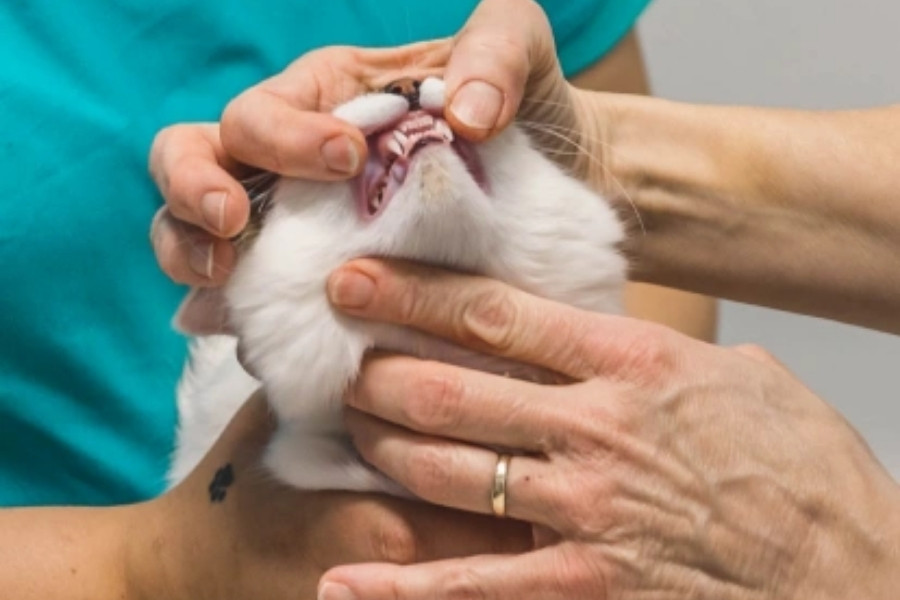
Dog bad breath ranges from mild plaque to advanced infection, and the smell alone is often the first thing a family notices. In our experience, pet owners tend to dismiss bad breath as normal when it is actually one of the clearest signs that something needs attention. Cats can be even harder to read, since they rarely paw at their face even when their mouth clearly hurts. If you notice any of these signs, contact your veterinarian promptly rather than waiting to see if they improve on their own.
Pet owners often ask us to rank the most common dog bad breath causes they should worry about. Plaque buildup and early gum infection top that list every time, well ahead of diet or chewing habits.
Causes and Risk Factors
Plaque forms on teeth within hours of eating and hardens into tartar within days if it is not removed. Small-breed dogs are especially prone to crowded teeth, which trap food and bacteria more easily than in larger breeds. Cats can develop a painful condition affecting the base of the teeth that is different from typical gum disease in dogs.
Age is one of the biggest risk factors. Cat dental disease signs often appear earlier than owners expect, sometimes by two or three years. Diet, genetics, and how often teeth are cleaned at home all play a role as well. Certain breeds are also more prone to crowded teeth, which trap food particles and speed up plaque formation. Even pets fed a high-quality diet can develop dental disease if their teeth are never brushed or checked.
We frequently remind our clients in Richmond that cat dental disease signs can be subtler than in dogs, since cats rarely show obvious discomfort even with advanced disease. Regular home care combined with professional exams gives pet owners the best chance of catching problems before they become painful.
How It’s Diagnosed and Treated
Diagnosing dental disease starts with a physical exam, followed by dental X-rays taken while the pet is under anesthesia. Heavy tartar buildup in dogs is usually visible right away, but X-rays reveal problems below the gum line that cannot be seen during a regular exam, including bone loss and hidden infection.
Treatment typically follows these steps:
- A thorough oral exam and dental X-rays to assess the full extent of the disease
- Professional cleaning to remove plaque and tartar above and below the gum line
- Extraction of any teeth that are too damaged to save
- Pain management and antibiotics if infection is present
- A follow-up plan for home care and future checkups
One of the most common questions we get from pet owners is why anesthesia is necessary at all. The answer is simple: it allows for a safe, thorough cleaning and accurate X-rays without causing the pet pain or stress. Attempting to clean a pet’s teeth while awake cannot reach below the gum line, where most of the damage actually occurs, and heavy tartar buildup in dogs often hides infection that a visual exam alone would miss. A pre-anesthetic exam and bloodwork help confirm the pet is a safe candidate before any procedure begins.
Prevention and Home Care Tips
Many pet owners assume that dry kibble alone keeps teeth clean. This is a common misconception. While some diets help reduce buildup, kibble alone rarely prevents dental disease on its own. A consistent pet dental care routine at home makes the biggest difference between checkups.
Try these steps to protect your pet’s teeth between vet visits:
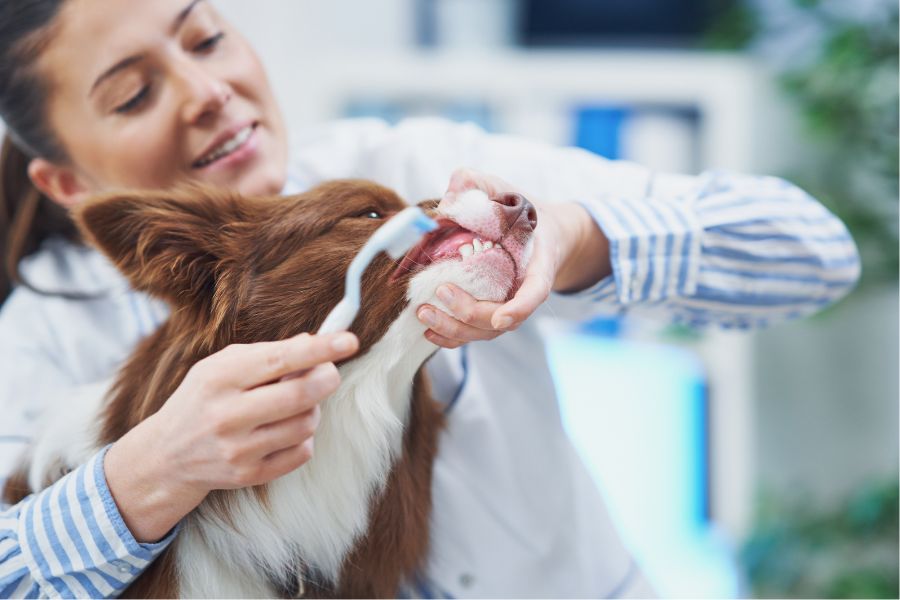
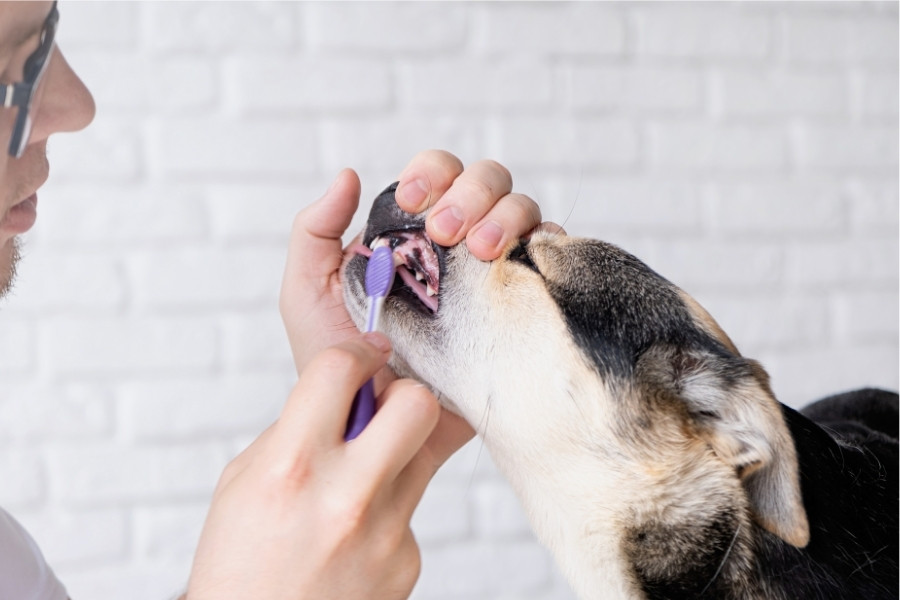
- Brush your pet’s teeth several times a week using a pet-safe toothpaste
- Offer dental chews or treats approved by your veterinarian
- Schedule regular oral exams so problems are caught early
- Watch for changes in eating habits, breath, or behavior
- Ask your veterinarian about the importance of teeth cleaning for your pet’s specific age and breed
We frequently remind our clients that prevention is far less stressful for a pet than treating advanced disease later. Consistency matters more than any single product. A few minutes of brushing several times a week, paired with an annual oral exam, keeps most pets ahead of serious problems. Understanding the importance of vet teeth cleaning early in a pet’s life often prevents years of discomfort down the road. At COTA Veterinary, our team walks pet owners through a home care plan tailored to their pet’s age, breed, and risk factors.
Conclusion
Dental disease in dogs and cats is one of the most common and most overlooked health issues vets diagnose. Bad breath, red gums, and reluctance to chew are rarely just cosmetic problems. They are often early signals of a much bigger issue building beneath the surface. Catching these signs early, combined with regular professional cleanings and consistent home care, protects far more than your pet’s smile. It protects their comfort, their appetite, and in many cases their overall long-term health. At COTA Veterinary in Richmond, VA, our team is ready to help you build a plan that fits your pet’s needs, whatever their age or breed. Book an appointment today.
Frequently Asked Questions
Q: What are the first signs that a dog has gum or tooth problems?
Ans: The earliest signs are usually bad breath, mild gum redness, and a thin layer of yellow buildup along the gum line. These signs are easy to miss at first, so regular checkups matter.
Q: Can dental disease in cats be reversed?
Ans: Early gum inflammation can often be reversed with a professional cleaning and consistent home care. Once bone or tooth structure is damaged, treatment focuses on stopping further progression rather than reversal.
Q: Is dental disease painful for pets?
Ans: Yes, even though most pets do not show obvious signs of pain. Dogs and cats are instinctively good at hiding discomfort, which is part of why the disease often goes unnoticed for so long.
Q: How often should a dog’s teeth be professionally cleaned?
Ans: This depends on the individual pet’s risk factors, breed, and current oral health. Your veterinarian can recommend a personalized schedule based on an oral exam.
Q: What happens if dental disease is left untreated?
Ans: Untreated dental disease can lead to tooth loss, painful infections, and bacteria spreading through the bloodstream to organs like the heart and kidneys. Early treatment prevents these complications.