Your cat just used the litter box four times in an hour and left behind only a few drops. That behavior is not quirky it is a warning sign. A urinary tract infection in cats is more common than most pet owners realize, and it can escalate into a serious health problem if left untreated. Knowing what to watch for and understanding how your veterinarian evaluates and treats this condition can mean the difference between a straightforward recovery and a dangerous complication. This guide walks you through the diagnostic process, the treatment options vets use, and what you can do at home to support your cat’s recovery.
Warning Signs That Something Is Wrong With Your Cat’s Bladder
Cats are naturally private about their bathroom habits, which makes early detection tricky. But when a urinary problem is present, the signs usually become hard to ignore. These are the cat UTI symptoms to watch for:
- Straining to urinate: Your cat squats in the litter box longer than usual but produces little to nothing.
- Frequent, short trips to the box: Multiple visits within a short window, each with minimal output.
- Blood in the urine: A pink or reddish tint in the litter or on white surfaces where your cat sat.
- Crying or vocalizing while urinating: Pain during urination is a clear signal that something is wrong.
- Urinating outside the litter box: Cats in discomfort sometimes associate the box with pain and avoid it.
- Excessive grooming of the genital area: Licking at the lower abdomen or rear end more than normal.
If you notice more than one of these signs together, contact your veterinarian the same day. A male cat that cannot urinate at all requires prompt veterinary attention a blocked urethra is a life-threatening situation. These are the cat UTI symptoms to watch for that should never be dismissed as minor behavioral changes.
What Causes Urinary Tract Infections in Cats
Not every urinary problem in a cat is a true bacterial infection. This distinction matters because the treatment approach changes significantly depending on the cause. Veterinarians recognize several underlying conditions that produce similar symptoms:
Bacterial UTI: More common in older cats, female cats, and cats with diabetes or kidney disease. Bacteria enter the urethra and multiply in the bladder, causing inflammation and discomfort.
Feline Idiopathic Cystitis (FIC): The most frequent diagnosis in cats under 10 years old. There is no bacterial infection involved. Instead, inflammation occurs without a clear cause, often triggered by stress, diet, or environmental changes. An estimated 50 to 60 percent of cats with lower urinary tract signs have FIC rather than a true infection.
Urinary Crystals or Stones: Mineral deposits in the bladder can irritate the urinary lining and mimic infection symptoms. These require targeted dietary or surgical management.
Anatomical Abnormalities: Less common but possible, especially in younger cats showing recurrent symptoms.
Understanding the root cause is why a proper examination matters far more than guessing. In Richmond, VA, indoor cats on dry-food-only diets tend to show up more frequently with urinary complaints, particularly during seasonal weather changes when water intake naturally drops.
How Veterinarians Actually Diagnose a Cat UTI
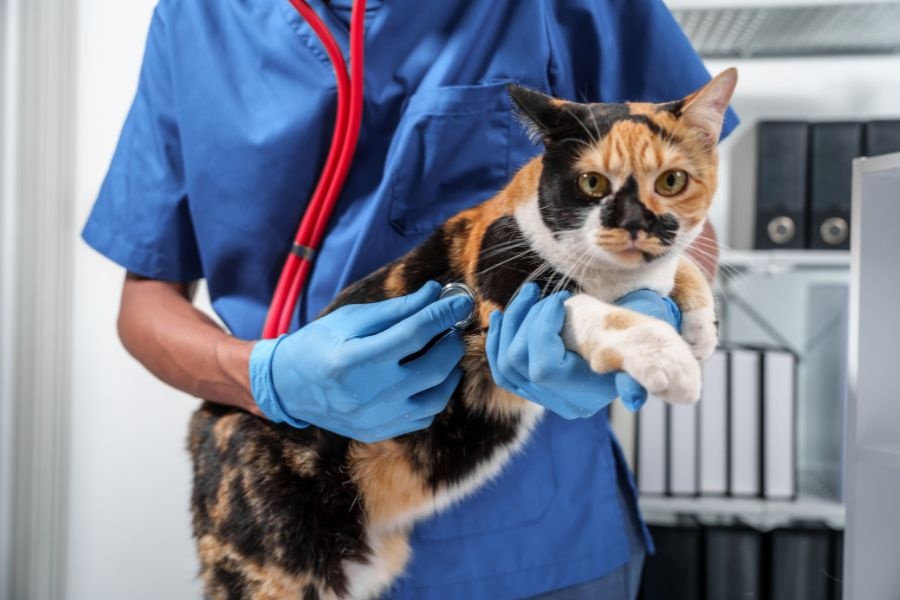
This is where how vets diagnose cat UTI becomes the central question and the answer involves more than one test. At your appointment, your veterinarian will follow a structured diagnostic process:
- Physical examination: The vet palpates the abdomen to assess bladder size, tenderness, and the presence of stones or masses.
- Urinalysis: A urine sample is collected often by cystocentesis, a sterile needle draw directly from the bladder and evaluated under a microscope for bacteria, blood cells, crystals, protein, and pH levels.
- Urine culture and sensitivity: If bacteria are present, this test identifies the exact organism and determines which antibiotics will eliminate it. This prevents misuse of broad-spectrum antibiotics.
- Radiographs or ultrasound: Imaging reveals bladder stones, masses, or structural issues that urine tests cannot detect.
- Blood panel: Recommended for cats with recurring symptoms or those over 7 years old to rule out kidney disease, diabetes, or other systemic contributors.
Dr. Alyssa N. Fenton, DVM, cAVCA, Managing Partner and Medical Director at COTA Veterinary, takes a thorough-first approach to urinary cases: “When a cat comes in with urinary signs, we never assume it is a straightforward infection. A urine culture tells us exactly what we are dealing with, and imaging rules out structural problems that antibiotics will not fix. Skipping steps often leads to repeat visits and a cat that keeps suffering.” Her nearly 20 years of clinical experience and focus on internal medicine make her especially well-equipped to untangle complex urinary conditions. This is how vets diagnose cat UTI correctly not by guessing, but by building a complete picture of what is happening inside the bladder.
Treatment Options for Feline Urinary Tract Infections
Once the diagnosis is confirmed, treatment is targeted to the specific cause. For a confirmed bacterial infection, your veterinarian will prescribe a course of antibiotics matched to the culture results. It is critical to complete the full course even if your cat appears to improve within a few days. Stopping early allows resistant bacteria to survive and reinfect.
For Feline Idiopathic Cystitis, antibiotics are not the answer. Treatment focuses on reducing stress, increasing water consumption, transitioning to a wet food diet, and, in some cases, adding environmental enrichment to lower anxiety at home. Pain relief medication may also be prescribed to keep your cat comfortable during recovery.
When crystals or stones are present, the cat bladder infection treatment plan may include a prescription urinary diet formulated to dissolve certain crystal types or, in more advanced cases, a surgical procedure to remove stones that cannot be dissolved through diet alone.
For cats with recurring episodes, your vet may recommend long-term dietary management, periodic monitoring, and a detailed home strategy to reduce flare-ups. The cat bladder infection treatment that works best is always based on what the diagnostics actually show, not on assumptions.
Supporting Your Cat at Home During Recovery
Veterinary treatment handles the infection, but what happens at home shapes how quickly your cat heals and whether the problem returns.
Increase water intake: Cats are naturally low-thirst drinkers. A pet water fountain encourages more frequent drinking, and transitioning from dry to wet food significantly boosts daily fluid consumption.
Reduce stressors: Litter box conflicts, new pets, construction noise, and household changes are common FIC triggers. Provide multiple litter boxes, keep them clean, and offer your cat quiet retreat spaces.
Follow medication schedules precisely: Give every dose at the scheduled time, and never stop antibiotics early.
Schedule a follow-up urinalysis: Your vet will want to confirm the infection has cleared before closing the case. A follow-up culture is especially important after a first diagnosed bacterial UTI.
Monitor litter box habits: Any return of straining, blood, or frequent unproductive trips should prompt a call to your veterinarian the same day.
For pet owners in Richmond, VA, where access to high-quality veterinary care is readily available, there is no reason to wait and see. Prompt attention to urinary symptoms consistently leads to better outcomes and faster recovery for cats.
When Symptoms Cannot Wait
Most urinary symptoms warrant a same-day or next-day vet visit. However, certain presentations require prompt veterinary attention and cannot wait:
- A male cat that has not urinated in more than 12 hours
- A cat crying out in obvious pain with no urine output
- A bloated, hard, or tender abdomen
- Lethargy combined with repeated unproductive litter box visits
- Vomiting alongside urinary symptoms
A blocked urethra, most common in male cats, becomes fatal within 24 to 48 hours without treatment. This is the one scenario in cat urinary health where speed of care is not just helpful it is life-saving. If your cat in Richmond, VA, is showing any of these signs, call your veterinarian immediately.
At COTA Veterinary, the team provides comprehensive diagnostic care for cat urinary conditions, using in-house urinalysis, imaging, and culture testing to find answers fast and treat the root cause not just the symptoms.
A urinary tract infection in cats is treatable and often fully resolved with the right diagnosis and a complete treatment course. The key is acting early, trusting the diagnostic process, and partnering with a veterinarian who takes the time to understand exactly what your cat’s body is telling them. Book an appointment today.
Frequently Asked Questions
Q: Can a cat UTI go away on its own without treatment?
Ans: Bacterial urinary tract infections in cats do not resolve on their own and will worsen without antibiotics. Feline Idiopathic Cystitis episodes may improve with stress reduction and dietary changes, but without a proper diagnosis, you cannot know which condition your cat has. Always consult your veterinarian before assuming the problem will pass.
Q: How is a cat UTI different from a urinary blockage?
Ans: A UTI is an infection in the bladder or urinary tract. A blockage means the urethra is physically obstructed and urine cannot exit the body at all. Blockages are more common in male cats due to their narrower urethras and are life-threatening without prompt veterinary treatment. If your male cat is straining with no urine output, seek care the same day.
Q: How long does it take for a cat to recover from a urinary tract infection?
Ans: Most cats with a confirmed bacterial UTI show improvement within 48 to 72 hours of starting antibiotics. A full antibiotic course typically runs 7 to 14 days depending on the organism and severity. Your veterinarian will recommend a follow-up urinalysis to confirm the infection has cleared before ending treatment.
Q: What can I feed my cat to help prevent UTIs?
Ans: Increasing moisture in your cat’s diet is one of the most effective preventive steps. Wet food, hydrating broths formulated for cats, and pet water fountains all encourage higher water intake, which keeps the bladder flushed. Prescription urinary diets may also be recommended for cats prone to crystals or recurring infections. Ask your veterinarian which option suits your cat specifically.
Q: Are female cats or male cats more likely to get UTIs?
Ans: Female cats are more prone to true bacterial UTIs because their shorter urethras give bacteria an easier path to the bladder. Male cats, however, are at much higher risk of urethral blockages due to their narrower anatomy. Both sexes can develop urinary symptoms, so any signs of discomfort during urination should be evaluated regardless of your cat’s sex.